
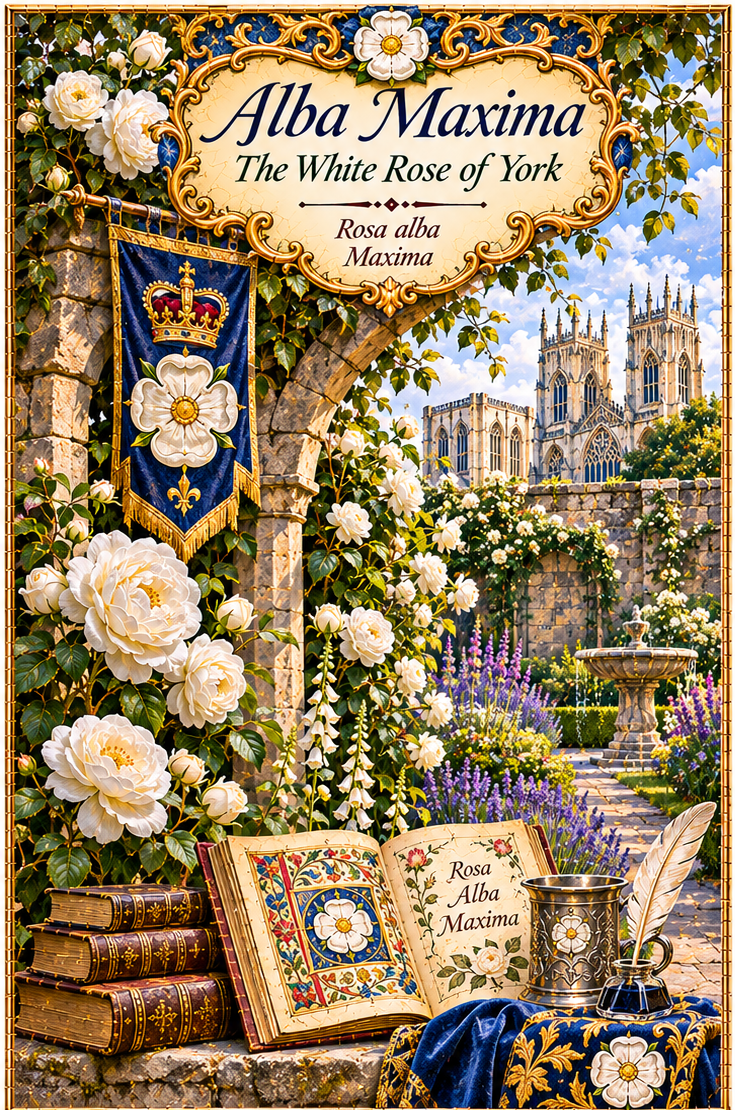
Rose Portrait
History & Heritage
Alba Maxima belongs to one of the oldest families of cultivated roses. Its precise origins are lost to history, but it is believed to have been grown before 1400. Its generous, many-petalled white flowers appear in Renaissance paintings, earning it another evocative name: the Painter’s Rose.
The Alba family is thought to have originated from a cross between the Gallica rose and a relative of the wild dog rose. Their hardiness and longevity made them particularly well suited to northern European gardens.
Unlike modern repeat-flowering roses, Alba Maxima blooms only once a year. Its abundant summer flowers, sweet fragrance, and distinctive gray-green foliage have nevertheless secured its place in gardens for centuries.
Known variously as the Great Double White Rose, the Cheshire Rose, the Jacobite Rose, and the White Rose of York, Alba Maxima carries in its many names something of Europe’s political, cultural, and horticultural history.
References:
Royal Horticultural Society — Rosa alba ‘Maxima’
World Federation of Rose Societies — Conservation and Heritage
Historic New England — The White Rose
Literary & Cultural Connections
Few roses evoke the drama of medieval English history as much as Alba Maxima. Traditionally associated with the White Rose of York, it recalls the dynastic struggles between the Houses of York and Lancaster during the Wars of the Roses (1455–1487).
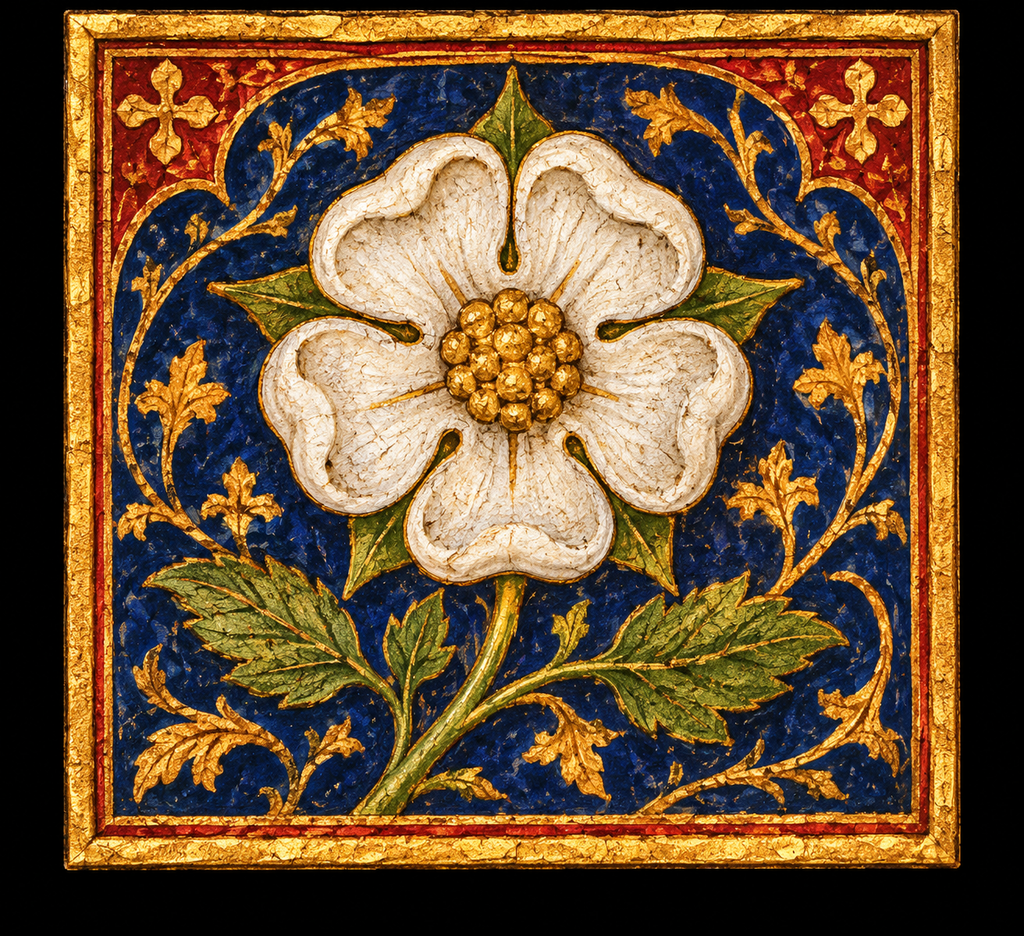
In Henry VI, Part I, Shakespeare immortalizes this rivalry in the Temple Garden scene, where the Duke of York declares:
Let him that is a true-born gentleman
And stands upon the honour of his birth,
If he suppose that I have pleaded truth,
From off this brier pluck a white rose with me.
Although Shakespeare’s scene is a dramatic invention rather than a documented historical event, its imagery has endured for centuries.
Following Henry Tudor’s victory over Richard III at Bosworth Field in 1485 and his subsequent marriage to Elizabeth of York, the red and white roses were united in the Tudor rose, a symbol of dynastic reconciliation.
Alba Maxima is traditionally identified with the Yorkist emblem, although the precise botanical identity of the historical white rose remains uncertain. Nevertheless, growing this rose is a particularly evocative way of bringing medieval history into a garden.
| Characteristic | Description |
|---|---|
| Botanical Name | Rosa x alba “Maxima” |
| Classification | Alba – Old Garden Rose |
| Origin | Ancient cultivar; exact origin unknown |
| Bloom Color | White to creamy white |
| Fragrance | Strong, sweet fragrance |
| Flowering Season | Late Spring to early summer; once blooming |
| Foliage | Gray-green |
| Growth Habit | Vigorous, upright shrub |